


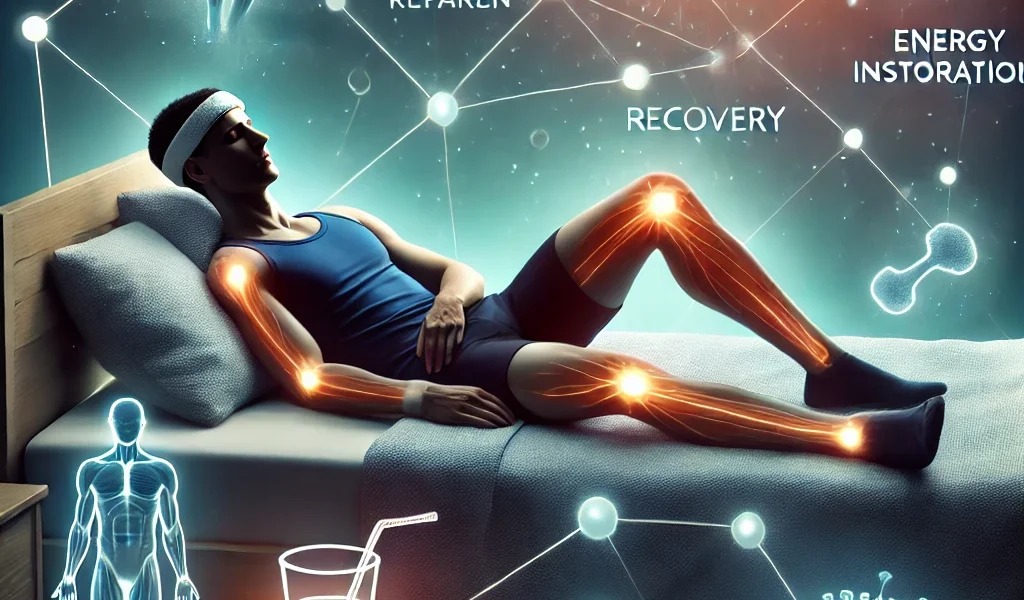
Sleep and recovery are often overlooked in discussions about productivity. Many men focus on time management, discipline, and output, while neglecting the biological systems that support performance. As a result, fatigue accumulates, focus declines, and efficiency decreases.
In modern environments, attention is divided across tasks and platforms. A person may switch between work, communication, and unrelated content, such as reading about ipl cricket betting in india, before returning to tasks that require concentration. This pattern disrupts recovery cycles and affects sleep quality.
Courses on sleep and recovery aim to address these issues by focusing on physiology. They teach how biological processes influence energy, attention, and performance, and how to manage them effectively.
Why sleep and recovery matter for productivity
Productivity is not only a matter of effort. It depends on the state of the body and brain.
Sleep supports:
- memory consolidation
- cognitive function
- emotional regulation
- physical repair
Without adequate recovery, performance declines even if effort remains high.
Courses emphasize that improving sleep is not optional. It is a requirement for consistent output.
Understanding sleep as a biological process
Sleep is not a passive state. It is an active process with distinct phases.
Sleep cycles
During sleep, the body moves through cycles that include:
- light sleep
- deep sleep
- rapid eye movement (REM) sleep
Each stage has a specific function.
Deep sleep supports physical recovery. REM sleep is linked to memory and learning.
Courses explain how these cycles work and why they matter.
Circadian rhythm
The circadian rhythm is the body’s internal clock.
It regulates:
- sleep timing
- hormone release
- body temperature
Disruption of this rhythm leads to poor sleep quality.
Courses teach how to align daily routines with this natural cycle.
Core modules in sleep and recovery courses
Effective courses are structured around key areas.
Sleep environment
The first module focuses on external factors.
Participants learn how to optimize:
- light exposure
- noise levels
- temperature
These factors influence sleep quality.
Pre-sleep routine
What happens before sleep affects the ability to fall asleep.
Courses teach how to:
- reduce stimulation
- establish consistent routines
- manage screen exposure
These practices support the transition to sleep.
Recovery strategies
Recovery extends beyond sleep.
Participants learn about:
- rest periods during the day
- physical recovery after activity
- mental relaxation techniques
These strategies help maintain energy levels.
The link between recovery and performance
Recovery is directly connected to performance.
When recovery is sufficient:
- attention improves
- decision-making becomes clearer
- reaction time is faster
When recovery is insufficient:
- errors increase
- motivation declines
- stress levels rise
Courses highlight this relationship to show why recovery should be part of any productivity system.
Practical methods taught in courses
To apply theory, courses include practical methods.
Sleep tracking
Participants learn how to monitor sleep patterns.
This includes:
- sleep duration
- sleep consistency
- perceived quality
Tracking provides data for adjustments.
Routine design
Courses guide participants in creating daily schedules.
This includes:
- fixed sleep times
- planned breaks
- activity timing
A structured routine supports physiological balance.
Stress management
Stress affects sleep.
Courses teach techniques such as:
- controlled breathing
- relaxation exercises
- cognitive strategies
These methods reduce interference with sleep.
Common mistakes in sleep management
Courses often address errors that disrupt recovery.
Irregular sleep schedule
Changing sleep times frequently affects circadian rhythm.
Excessive stimulation
Late exposure to screens or intense activity delays sleep onset.
Ignoring recovery needs
Continuous work without breaks reduces overall performance.
Overreliance on external aids
Some individuals depend on substances or tools instead of addressing underlying issues.
Courses focus on sustainable solutions.
Skills developed through these courses
Sleep and recovery training develops several skills.
Self-regulation
Participants learn to manage their routines and responses.
Awareness of physiological signals
Recognizing signs of fatigue or stress helps prevent overload.
Planning
Structured schedules improve consistency.
Adaptability
Participants learn to adjust routines based on changing conditions.
Application in daily life
The principles taught in these courses can be applied in various contexts.
Work
Improved recovery leads to better focus and efficiency.
Physical activity
Recovery supports performance and reduces risk of injury.
Decision-making
Adequate sleep improves clarity and reduces errors.
Choosing the right course
When selecting a course, it is important to consider:
- focus on practical application
- clear explanation of physiological processes
- structured approach
- tools for implementation
A course should provide actionable methods, not only theory.
From knowledge to habit
Understanding sleep is not enough.
Participants must integrate practices into daily routines.
This includes:
- maintaining consistent sleep times
- applying recovery techniques
- adjusting habits based on feedback
Consistency is key to long-term improvement.
Conclusion
Courses on sleep and recovery for men provide a structured approach to improving productivity through physiology. They emphasize that performance is not only about effort, but also about how the body functions.
By understanding sleep cycles, circadian rhythms, and recovery strategies, participants gain tools to manage energy and focus. These skills support both professional and personal activities.
In a fast-paced environment, where attention is constantly divided, the ability to recover effectively becomes a critical factor. Sleep and recovery are not passive processes. They are active components of productivity that can be learned and optimized.
